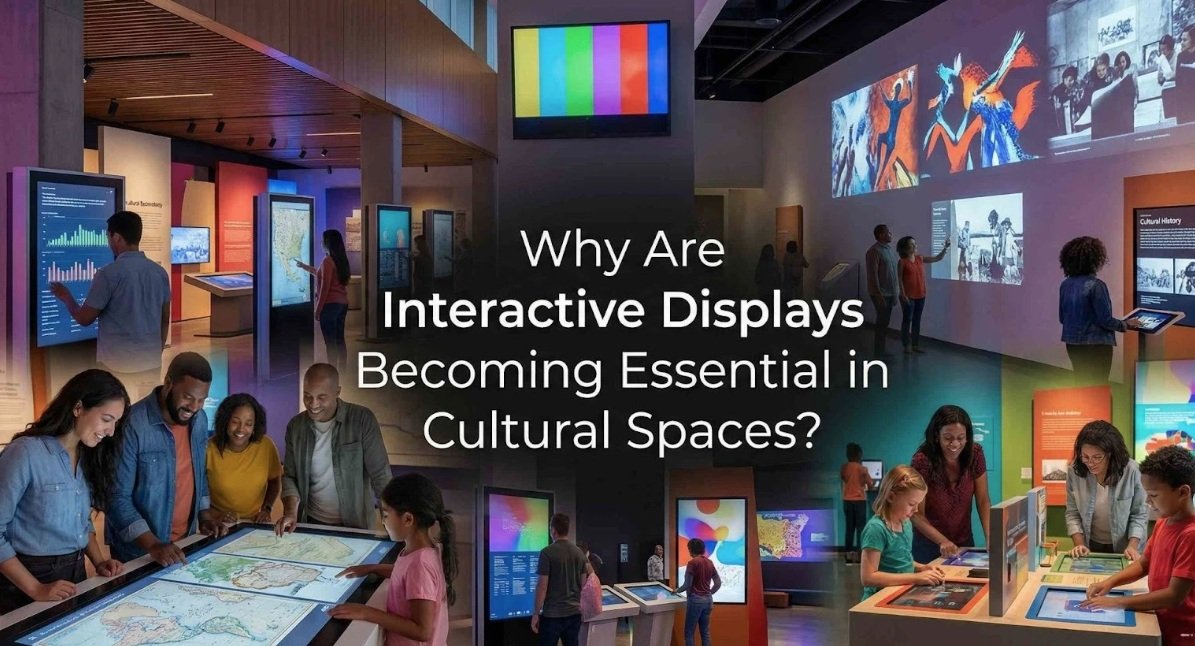
Enter any museum, school or community center in the modern day and chances are, you will see something different than it was ten years ago. In place of the rows of framed photographs and dusty trophies that few may ever stop to read, there are screens that are vivid, responsive and inviting. People lean in.Kids tap and swipe. Adults also stay at the exhibit for extended periods because they find it interesting.
That change is not coincidental. The interactive displays are silently changing how cultural institutions tell their stories, and the reasons behind such change are worth understanding.
The Problem With Walls
In the old days the conventional means to honor achievement was to hang something on a wall. A plaque here, a trophy case there, a 1987 team photo in the corner that nobody walks past.
Their purpose was never ill:
- Conserve history
- Honor individuals
- Build pride
But there were practical restrictions in the execution. Wall space ran out. Displays became outdated . New achievements were either squeezed in or omitted. And visitors? They would look, perhaps stop a moment and continue.
Static displays ask very little from the viewer and in return the viewer also gives very little back . That is not the way meaningful connection is made.
What Changes When Displays Become Interactive
When you take a touchscreen interactive board instead of a static board, something fundamental changes. The viewer becomes a participant.
- For Students: A student does not need to read a name on a plaque, a tap on a former athlete can allow a student to watch a highlight reel.
- For Prospective Families: It takes a few swipes to get a glimpse of decades of academic success by a prospective family touring a school.
- For Alumni: An alumnus visiting after twenty years is able to search his/her class and find faces that he/she has not seen in a long time.
Such interaction is difficult to create by a static design, it occurs naturally once people are provided with the tools to explore on their own terms.
The other very practical problem is that interactive displays are not restricted by physical space. A single screen can house thousands of records, photos and stories. What once occupied a full hallway in cabinetry can now reside in a smooth display that can be placed in a corner of the lobby.
Why Cultural Institutions Are Paying Attention
Schools are discovering that interactive displays are able to reach multiple audience at once, which is rare
Impact on Students and Alumni
To the present-day students, it brings a sense of belonging and aspiration.. When you can see the names and accomplishments of the people who came before you, your school becomes something that has history.
To alumni, they are a bridge back. A well-designed digital hall of fame doesn’t just archive names, it tells stories, surfaces context, and makes recognition feel real rather than ceremonial. Alumni who truly feel connected to their school would also have a much higher chance of remaining involved, donating, and promoting the school.
Advantages for Administrators
To the administrators, flexibility is their value.
- Manual Refresh: Traditional displays need physical work, printing work and at times needs a crew.
- Digital Updates: It only requires a few clicks to update a digital display.
That is not a small difference, in the course of years it becomes a significant operational advantage.
The Experience Has to Feel Right
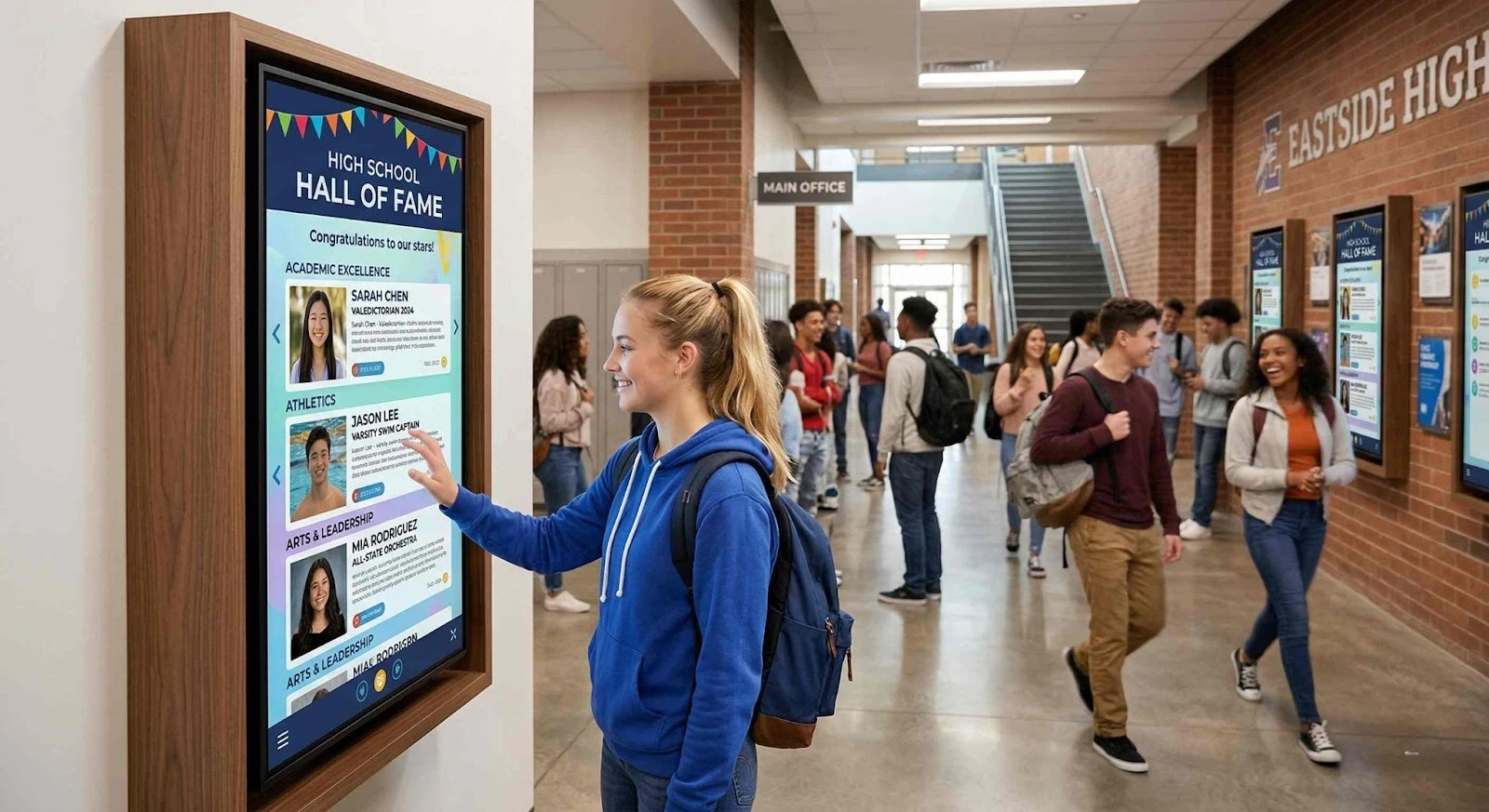
There is a big exception to this: not every interactive display is equal. A touchscreen which loads slowly, is hard to use, or is cluttered with visuals does not impress people, it actually irritates them.
The technology must be effortless:
- Tap something and it responds instantly.
- Search for a name and it comes up neatly.
- Search ten years of history and the interface does not make it seem overwhelming.
This is the reason why the software behind it is as important as the hardware. Institutions that invest in a touch hall of fame think carefully about the user’s journey, not just what information to include, but how it feels to find it. Speed, clarity and friendly design is not a nice-to-have. They are what makes a display stand out as a centerpiece from one that gathers figurative dust.
Beyond the Lobby: Reaching People Anywhere
A more interesting transformation that is currently occurring is that interactive legacy content does not have to live in a physical space at all.
Cloud-based platforms imply that the stories, records, and recognitions that are available on the lobby screen of a school can also be viewed on a phone by a parent in the other state. The display is more of a gateway than a destination.
In the case of schools struggling to attract students, gain the attention of donors or maintain connections with their broader community, such reach is invaluable. The history of your institution should not be available only to people who just happen to pass by the main entrance.
A Living Record, Not a Frozen One
Perhaps the most important thing interactive displays offer is the ability to keep the story going.
History is not finished. Each new generation of graduates contributes something new. Each season brings its successes to be celebrated. Each year, there is an alumni who achieves amazing things in the world. A static image captures a point in time. An interactive dynamic system grows alongside the institution it represents.
That, ultimately why these displays are becoming essential, not only because they look great, but also because they do something that static formats simply are incapable of doing. They allow a school, a museum, a community center to say that this story is being written and everybody who has been a part of it deserves to be seen.
When done properly, that’s not just good technology. It is a nice story telling.